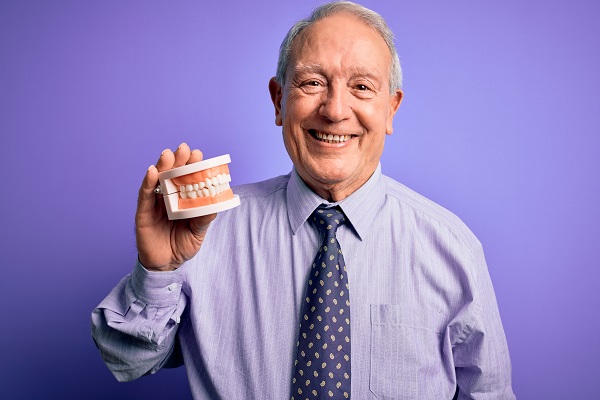
Broken dentures are a fairly common occurrence and not typically a cause for alarm. However, a broken denture can make necessary functions like eating and talking difficult, so the piece should be repaired as quickly as possible. Before scheduling an emergency appointment, check to see which part of the denture is broken and determine if there is a temporary fix available. Here are a few common types of breaks and tips for how to handle the situation.
Broken denture teeth
This can be the easiest break to patch temporarily until a professional can repair it with a new denture acrylic.
Superglue
A denture tooth can be glued on and worn temporarily. Make sure the denture is dry and sitting on a hard, clean surface. Apply a small amount of the glue and push the tooth back into place. Only reinsert the denture in the mouth after the glue has fully dried. Superglue has a chemical taste and is slightly toxic, so dentures repaired by this method should only be used briefly to get through important situations like a work meeting, a special party or family pictures. The sooner the tooth is professionally repaired, the better.
Drugstore denture repair kit
While the process for using this type of kit to repair broken dentures is similar to the superglue method, the adhesive should be FDA-approved. Some kits include a few teeth that may replace one that was lost. Though many of these kits mention cracked dentures, attempting to fix a denture crack without professional help is never recommended. Attempting to do so can lead to needing an entirely new denture.
Cracked teeth or denture or missing pink acrylic
A denture or tooth that has been snapped in two, chipped or cracked should never be repaired at home. An untrained individual is unlike to be able to get the cracked tooth filled or the cracked dentures back together exactly the way it was. Once a repair has been attempted unsuccessfully, there is no way to take the denture apart again to fix it properly without breaking it. Continuing to wear an incorrectly repaired denture can cause the following issues:
- The dentures rubbing the gums in different places
- Loss of suction between the denture and the gums
- Incorrect or uncomfortable bite
- Unsightly seams or angles
It is better to schedule a dental appointment as soon as possible in the case of cracks or breaks instead of attempting to fix the denture alone.
Conclusion
When faced with a broken denture, having it professionally repaired can allow it to look more natural and prevent the break from recurring. In cases where an important function is taking place or it will take a couple of days to get a dentist appointment, denture repair kits or superglue may be a very temporary option. However, as attempting a repair alone can be toxic or harmful to the denture, it is generally recommended to wait until the dentures can be repaired by a professional if at all possible.
Are you considering dentures in the Chesterfield area? Get more information at https://www.mfgrassodds.com.
Check out what others are saying about our dental services on Yelp: Dentures in Chesterfield, MO.
Recent Posts
If you are missing teeth, it can be both a cosmetic annoyance and a health issue. Luckily, your dentist can treat this issue and help you regain a beautiful smile. There are various effective solutions you can choose from. Your dentist can discuss the benefits and drawbacks of each of these so you can make…
Pinhole surgical treatment is a minimally invasive procedure that addresses gum recession. This innovative technique offers a more comfortable alternative for restoring gum health and improving the smile's appearance. Pinhole surgical treatment can be a game-changer for those dealing with exposed tooth roots, sensitivity, and the risks associated with gum recession.Gum recession occurs when the…
Laser dentistry offers an alternative to ultrasonic drills by using focused light to remove tooth decay, shape tissue, and sanitize surfaces. Although the traditional drill delivers reliable results for many dental needs, dental lasers have improved the effectiveness of conservative techniques and patient comfort. A trusted dentist can recommend one approach over the other after…
Patients often search for root canal treatment when a tooth aches from deep decay, a crack, or inflamed pulp tissue. This therapy removes irritated nerve tissue, disinfects the canal space, and seals the tooth to prevent reinfection. By preserving the natural root, the procedure maintains bite balance and chewing strength. With careful planning, a restored…